Students Bring Occupational Therapy Closer to the Community
 Ms Danielle le Brasse (left) and Ms Jenna Saxby (student) intervene with client, Ms Smangele Mpathi who has a “spastic” hand.
In collaboration with Durban Green Corridors, final-year Occupational Therapy students at UKZN offer wellness programmes, rehabilitation, developmental milestones and educational programmes at the Inanda Wilderness Park in Durban. All activities take place outdoors, enticing people to venture outside and enjoy being in nature.
This five-year community outreach project is spearheaded by Ms Chantal Christopher, an academic within the Discipline who believes that, ‘we need to take the University onto the streets to avoid the risk of being an ivory tower on the hill.’
The students use occupational therapy to promote health and well-being across generations, especially among the elderly and crèche/school going children. Six full-time site assistants maintain the park, and three youth mentors implement the programmes.
Qualified Occupational Therapist Ms Danielle Le Brasse, who is the site manager said, ‘I am passionate about making a difference in people’s lives and about physical and paediatric intervention and community-based rehabilitation. I am also interested in investigating how South Africa’s history has shaped our township communities and the role I could play in improving the quality of life. The Wilderness Park provides the platform to put these passions to work and see positive results.’
She said that, pre-lockdown, around 400 visitors visited the park each month, including school groups and groups of senior citizens. Individual sessions are offered to those with disabilities, stroke victims, amputees, and children with learning difficulties, and developmental delays.
COVID-19 stalled the programmes which will be back on track soon as park life returns to normal and they look forward to once again seeing older folk enjoying their specially designated area, dancing, gardening, chatting or simply appreciating nature seated on upcycled furniture made from donated pallets.
Youth mentors have been trained to work with the elderly and on health-related precautions. They run a dance exercise programme each week with 15 elderly clients from the nearby old age drop-in-centre.
The park is a pilot project for Durban Green Corridors and is supported by the eThekwini Municipality. Durban Green Corridors aims to expand this model to other areas around Durban alongside the many Green Spaces Projects already in existence.
Durban Green Corridors welcomes volunteers to work within its many programmes.
Words: Nombuso Dlamini
Photograph: Supplied
author : .author email : .Professor Nurtures Talent in Statistics
 UKZN Professor of Applied Statistics, Temesgen Zewotir.
Professor of Applied Statistics in the School of Mathematics, Statistics and Computer Science (SMSCS), Temesgen Zewotir, has established himself as a top researcher and a developer of young talent in the Discipline of Statistics as he pursues research and training in Data Science and Applied Statistics.
Originally from Bahir Dar in Ethiopia, Zewotir joined UKZN in 2003 as a senior lecturer in Statistics and is now a full professor in Applied Statistics. He obtained his undergraduate and honours degrees in Mathematics from Asmara University, and his Masters and PhD in Mathematical Statistics from the University of Addis Ababa and University of the Witwatersrand, respectively. He worked at the National University of Lesotho and Addis Ababa University before joining UKZN.
Zewotir’s research focus in Applied Statistics and Data Science covers a range of multidisciplinary applications. He is particularly interested in the abundance of data that could accelerate the development and refinement of basic research and theories, and has interacted with and consulted several postgraduate students, researchers, practitioners and companies in agriculture, business, life sciences, education, health, medicine, economics, management, and social sciences. His approach is characterised by unpicking the innate complexity of real-world datasets to reveal realities that affect how organisations and systems run.
With over 115 publications in accredited, peer-reviewed journals and 15 doctoral and multiple masters theses supervised, Zewotir has a strong track record in research and supervision, and is a nationally- and internationally-recognised expert in statistics methods and applications. In 2020, he was recognised by the College of Agriculture, Engineering and Science for his outstanding research productivity in the SMSCS.
For his work in statistical methods and statistical education, Zewotir is an elected member of the International Statistical Institute (ISI), the highest international recognition accorded to established statisticians who have made significant contributions to their profession, and a rare honour for statisticians from developing countries. He is also a member of the ISI Data Science Working Group.
A National Research Foundation rated scientist, Zewotir has contributed his expertise to the World Bank, and the Inter-University Council of East Africa for the African Higher Education Centers of Excellence Project. He is an international advisory board member for both the African Center of Excellence in Data Science and the Integrated Demographic and Health Series, and regularly reviews articles for national and international journals.
Together with Dean and Head of the SMSCS Professor Delia North, Zewotir has been involved in planning and establishing the Statistical Analysis System (SAS) Industry Unit in the SMSCS to train students through a Bachelor of Science Honours, Postgraduate Diploma and Masters in Data Science. Zewotir, who heads the Unit, believes it will train statisticians who are versatile and can add problem-solving value to the challenge of comprehending enormous volumes of data and extracting important information.
‘In Africa, statistical scientific knowledge is being perceived with increasing positivity by the public, yet while we produce considerable numbers of graduates in statistics on the continent, they have little real-world experience to help them fill the acute shortage of big data, data science and analytics-skilled professionals,’ he said.
‘We have been planning tirelessly to equip graduates with the knowledge and skills to correct this disconnect between the skills provided by the degree and the requirements of industry, and to assist graduates in becoming national and international leaders in statistics.’
The industry unit has not only increased in-house staff capacity for training data scientists in the SMSCS, but also raised the profile of African data science scholarship. Offering world-class data science for business training at the University’s Westville campus, in 2021 it will accept up to 25 masters and 25 postgraduate diploma students. Students have the unique opportunity to apply their theoretical learning to practical, industry-identified problems and present their solutions to industry partners for feedback, as well as participate in work-based learning opportunities and internships.
The Discipline’s partnership with various industries has also seen the development and continuous improvement of an industry-focused professional master’s degree and postgraduate diploma in Data Science, as well as postgraduate programmes in Data Science, Statistics, Quantitative Risk Management and Customer Intelligence Analytics. The Unit contributes to the development of curricula and shares data science and data-driven thinking training and learning expertise across multiple schools at UKZN, and offers data science and data analytics workshops, short courses, training events, and congresses.
Words: Christine Cuénod
Photograph: Supplied
author : .author email : .UKZN Academic and Student Present at International Conference
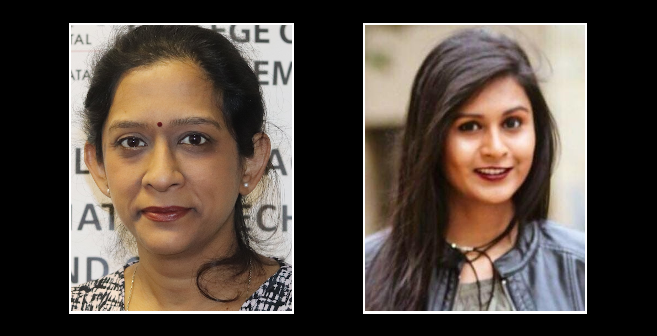 Human Resources Management lecturer, Dr Ashika Maharaj (left) and Master’s of Commerce graduate, Ms Suman Dayanand.
Senior lecturer in Human Resources Management, Dr Ashika Maharaj and Master’s of Commerce graduate Ms Suman Dayanand presented a paper titled: The Role of Social Media as a tool for recruitment from the perspective of HR practitioners, at the 6th International Conference on Business and Management Dynamics (ICBMD).
The Conference themed: Enhancing Africa’s Development and Competitiveness in the Digital Economy and Beyond, was held virtually and saw scholars and researchers present on contemporary and developing issues in disciplines related to Business Management.
Maharaj and Dayanand’s paper was based on the latter’s thesis which was supervised by Maharaj.
‘Recruitment is integral to human resources management and the war for talent continues to be a matter for concern,’ explained Dayanand.
‘The study found that the use of LinkedIn and Twitter led to effective recruitment. LinkedIn was favoured for filling senior manager positions, while Twitter attracted graduates and entry-level candidates. The results indicated that social media recruitment in companies was more cost-effective and efficient. However, HR practitioners were not using social media to full effect for recruitment due to a skills gap. Upskilling is thus required. It is recommended that further research be conducted on postgraduates’ use of social networking sites for job seeking, and the sites that HR practitioners use for recruitment,’ she added.
According to Maharaj, the paper ‘was well received by reviewers and colleagues. The topic was regarded as current and relevant in light of E-recruitment innovation forced by the COVID-19 pandemic.’
Words: Thandiwe Jumo
Photographs: Supplied
author : .author email : .UKZN-SAICA Students’ Awards Ceremony
 High-achieving Accounting students who received awards at the ceremony.
Top achieving students in the School of Accounting, Economics and Finance were recognised for their academic excellence at the annual UKZN-SAICA Students’ Awards Ceremony.
The virtual prize giving saw 47 awards being bestowed on first, second and third-year and postgraduate students in various categories.
In his welcome address, Dean and Head of School Professor Mabutho Sibanda highlighted that the accounting programme’s throughput has improved, a sign that the teaching and learning interventions implemented by the School are yielding results.
‘In 2016, the throughput rate at third-year level was 55%. This improved to well over 85% in 2019. The deliberate interventions and initiatives put in place by the School with the assistance of the accounting programmes Advisory Board is behind this improvement,’ said Sibanda.
He added that the COVID-19 pandemic did disrupt the academic programme and thanked students and academics for remaining committed to academic studies during these difficult times.
‘The ceremony comes at a time when the whole world faces a new normal caused by COVID-19. I am grateful to the academic and professional staff who ensured that the academic programme is a success and the students who have endured much hardship studying in uncomfortable and unconducive environments,’ he said.
SAICA Regional Executive Mr Naeem Asvat advised students to ensure that ethics and integrity are the foundation of their careers.
‘We are grateful to your parents and lecturers for the role that they have played in your success. This is the beginning of the journey and not the end. One of the most important aspects of the profession is the ethical responsibility that you have as a citizen, a professional and to society. It is imperative that you make ethics and integrity the foundation of your being,’ he said.
Top achievers in their year of study, Mr Lindani Biyela (first-year), Mr Okuhle Dlame (second-year), Ms Nomfundo Khawula (third-year) and Mr Fanele Majola (fourth-year) are proof of the successful drive to produce more African Chartered Accountants. Top honours went to Mr Mikailen Naidoo (overall top first-year student), Ms Meleshnie Govender (overall top second-year student), Mr Sriram Maharaj (overall top third-year student) and Mr Muhammed Bacus (Overall top fourth-year/PGDA student).
Senior Manager/Training Officer at the Auditor-General’s office, Ms Lungile Mnqayi congratulated the students and advised them to be aware of and use all the resources available to them.
‘You have done well although 2020 has been and still is a very challenging year. In our profession, it definitely does not get easier but you are fit to make your dream of becoming a chartered accountant come true. We look forward to seeing you next year as trainee auditors within the Auditor-General’s office.’
The Auditor-General of South Africa sponsored the event, with individual prizes sponsored by SAICA, Lexis Nexis, BDO, Deloitte and Sherwood Books.
Watch the awards here: https://www.youtube.com/watch?v=aGGHHJVQE9Q
Words: Thandiwe Jumo
Photographs: Supplied
author : .author email : .Medical Student Part of World Breast Cancer Awareness Drive
 UKZN Medical student, Mr Mohamed Hoosen Suleman.
Second-year Medical student, Mr Mohamed Hoosen Suleman has joined the International Federation of Medical Students’ Association’s (IFMSA) Small Working Group (SWG) to drive the campaign for World Breast Cancer Awareness Month. Of 190 applications by Medical students worldwide, only 10 were shortlisted.
Each year in October, the medical community marks World Breast Cancer Awareness Month with many projects and campaigns to inform and educate the public about breast cancer. Alongside members of the SWG, Suleman prepared a month-long campaign for members of the IFMSA.
The initiative, dubbed InkOctober, calls on IFMSA members to submit their pieces and work related to breast cancer, to support to the campaign and show solidarity with breast cancer survivors.
The SWG brings together passionate and dedicated members to plan, initiate, and co-ordinate the campaign. Through IFMSA channels, medical and public health students globally are encouraged to express their thoughts, feelings, and emotions about breast cancer. Among other activities, the project entails online engagement through the official IFMSA channel, two webinars by Suleman and the team, posters, artistic work, and awareness strategies.
Suleman said, ‘Breast cancer awareness is very important if we aim to reduce the incidence and burden of the disease. It is imperative that we also focus on strategies that contribute to early detection, treatment, and palliative care. Another goal of Breast Cancer Awareness Month is to advocate for robust research into the causes, prevention, diagnosis, treatment, and cure of breast cancer.’
The SWG has three primary objectives:
1. To enhance the knowledge base of specific target groups regarding the different medical aspects of breast cancer, including current statistics and epidemiology, risk factors, the negative public health impact, treatment, and prevention.
2. To encourage the broader medical community to develop and implement activities for breast cancer awareness and support breast cancer patients and survivors.
3. To promote healthy lifestyles and non-communicable disease programmes through sharing resources and discussions with experienced activity co-coordinators.
The group has compiled a manual that will be published by the IFMSA. It equips the reader with knowledge and skills on screening, treatment, and prevention of breast cancer, the psychosocial impact, myths, and breast cancer in the time of COVID-19.
Words: Lihle Sosibo
Photograph: Supplied
author : .author email : .High Levels of Burnout, Anxiety and Depression amongst KZN Doctors - Study Finds
 Psychiatry Registrar, Dr Thejini Naidoo.
A study by UKZN’s Dr Thejini Naidoo, a Psychiatry Registrar based at King Edward VIII Hospital, found a high prevalence of burnout, anxiety and depression amongst medical doctors in KwaZulu-Natal (KZN).
The study, which was conducted in five public sector training hospitals in KZN, formed part of her Masters of Medicine specialising in Psychiatry.
Naidoo who hails from Tongaat, is passionate about assisting her colleagues through support programmes aimed at improving their well-being, which she notes is an often neglected aspect of health. Of the 150 participants in the study, 88 screened positive for burnout indicated by emotional exhaustion or depersonalisation. A fifth also screened positive for anxiety and depressive symptoms.
Previous studies have indicated that high rates of burnout exist amongst medical doctors in South Africa. A cross-sectional study in the Western Cape in 2011 found that all the participants practicing as junior doctors experienced a high degree of burnout. A 2013 study in the same province found that 76% of doctors suffered burnout, with high levels of burnout also reported in Gauteng and Bloemfontein. Naidoo’s study concluded that younger doctors were more vulnerable to burnout whilst older ones were more likely to experience anxiety and depressive symptoms.
Organisational factors found to contribute to burnout included a lack of clinical supervisor support and hospital resources, particularly in resource constrained training hospitals. Naidoo found that burnout comprised of three components, namely, emotional exhaustion, depersonalisation and personal incompetence. Emotional exhaustion manifested in long periods of emotional and physical fatigue, while depersonalisation referred to feelings of negativity and detachment from the job. Personal incompetence was experienced by those that had feelings of incompetence and a lack of achievement at work.
Individual and organisational factors associated with burnout included work stress and anxiety; balancing work and personal life; long working hours; high workloads; poor working conditions; public system-related frustrations; insufficient vacation time; inadequate equipment; poor management support and low work satisfaction. The study also found that the HIV and AIDS epidemic as well as the mass exodus of doctors from South Africa place further strain on those remaining in the public sector.
Naidoo said, ‘All these factors can have a negative impact on patient care and pose increased risk for psychiatric co-morbidities such as suicide, anxiety and depression. I would recommend that the Department of Health investigates the prevalence of burnout and implements evidence-based strategies. At the individual level, doctors should embrace mindfulness, stress management, exercise, communication skills training and participation in small group programmes oriented around promoting and building a community. At the organisational level, measures should be put in place to reduce working hours and the workload, and improve institutional support and advocacy for peer support with a focus on junior doctors.’
Naidoo was supervised by UKZN’s Dr Saeeda Paruk (psychiatrist) and Dr Mitsuaki Tomita (epidemiologist). She is married with one child and enjoys gym, and art. ‘Despite my hectic work load and studies, I continue to strive to be the best mom and wife that I can be by prioritising and spending quality time with my family.’
Words: MaryAnn Francis
Photograph: Supplied
author : .author email : .Discussion on Femicide During COVID-19
 From top left clockwise: Professor Nirmala Gopal, Professor Mzikazi Nduna, Dr Ephraim Sibanyoni and Dr Amira Paripurna.Click here for isiZulu version
The College of Humanities’ webinar on Conceptualisation, Implications and Patterns of Femicide during COVID-19 and preventative measures featured Professor Mzikazi Nduna (Wits University) and Dr Amira Paripurna (Universitas Airlangga, Indonesia).
The session was chaired by Professor Nirmala Gopal (UKZN) and convened by Dr Ephraim Sibanyoni (UKZN).
Nduna looked at violence against women, femicide and the COVID-19 lockdown in South Africa, barriers to women leaving toxic situations, femicide prevention interventions and the limitations of what is known about femicide during the lockdown. ‘South Africa experienced a surge in rapes and killing of women during the 2020 COVID-19 lockdown with three high-profile cases sparking social media and other campaigns. As people spend more time in close proximity in household isolation, women and children are at risk of experiencing higher levels of violence,’ she said.
Nduna believes that femicide does not occur in a vacuum and is part of a continuum of gender-based violence that is perpetuated by cultural norms embedded in society. ‘It is meted out on women through harmful social and stereotypical gender norms, and practices endorsed by patriarchy remain at the root of it. When it comes to irrevocably and radically shifting societal standards towards humanising women outside violence, most of society remains impervious.’
She suggests a reduction in gun ownership and facilitation of early separation and divorce. ‘There should be safety for women going through separation and divorce where violence was a feature of the relationship. The time for calls to action is over - we must ACT!’
Paripurna focused on the challenges and opportunities in preventing domestic violence in Indonesian Muslim society. She showed that the state is unable to resolve the existing conflict between the requirements of the law - which oblige the state to amend conflicting legislation – and the provisions of both civil and Islamic marriage laws, which create the potential for violence against women in the household.
‘The gender bias in family law has perpetuated the occurrence of domestic violence. Furthermore, in many cases media and society only focus on the man and his love and forget the voice of the (murdered) female victims. The community is busy looking for perpetrators, hearing stories from perpetrators. Even before the law, the voice and perspective of the perpetrators are often the only ones heard,’ argued Paripurna.
She noted that the promulgation of the Anti-Domestic Violence Law gives hope for the elimination of domestic violence in Indonesia. ‘The law comprehensively specifies the types of domestic violence and provides norms conducive to preventing it. However, this Law alone is insufficient without it being followed by efforts to amend Indonesian family law, which still perpetuates discrimination against women,’ she said.
Words: Melissa Mungroo
Photograph: Supplied
author : .author email : .Drama Student Lands Role in Uzalo
 UKZN Drama student, Ms Nomthandazo “Tee” Xaba.Click here for isiZulu version
UKZN Drama student and former Idols SA season 13 and My Kitchen Rules contestant, Ms Nomthandazo “Tee” Xaba has landed a role in South Africa’s leading daily drama, Uzalo.
Apart from being a full-time student, Xaba is a radio jock on East Coast Radio, and made her debut in Uzalo as Sphilile, a possible partner for Gabisile’s son, Sibonelo, a handsome doctor in KwaMashu.
‘It happened by accident. I was auditioning for another role, and I guess they saw this character as a better fit for me. I’m so humbled and blessed to be on the show. When I look back at my journey from Idols to My Kitchen Rules to East Coast Radio and now Uzalo, it all feels surreal,’ she said.
Xaba compared her own character to that of Sphilile, saying that the latter is more confident when it comes to relationships. ‘Unlike me, she’s confident when it comes to relationships. Sphilile was put up against two other potential women, but she won the heart of her potential mother-in-law. She comes from a good family and is very humble. However, as I played her character, I realised that there is more to her. She is very mysterious and in time viewers will get to know her better. I’m still trying to figure out if she’s really in it for love or money,’ she said.
Xaba has always been a fan of Uzalo. ‘It has moulded so many careers and to be part of the leading daily drama in the country is a huge success for me,’ she said.
Words: Melissa Mungroo
Photograph: Supplied
author : .author email : .Alumnus Donates Royalties to 2 000 Vulnerable Families
 UKZN alumnus, Mr Zakes Bantwini.Click here for isiZulu version
House musician and UKZN alumnus, Mr Zakes Bantwini recently visited Ubuntu Pathways in Port Elizabeth’s Zwide Township to hand over his donation of royalties from his collaboration with global American Singer Lauv in which Bantwini remixed the Modern Loneliness single.
Ubuntu Pathways is a non-profit organisation that provides a transformative support system to 2 000 vulnerable children and their families in Port Elizabeth townships.
‘It is an honour to play a meaningful role in the vital work that Ubuntu Pathways is doing,’ said Bantwini. ‘I am also grateful to Lauv for the opportunity to remix Modern Loneliness. Working with this gifted songwriter who takes his independent spirit into the realm of social impact is something I will never forget.’
Lauv also shared how happy he was that his music is being used as a tool to help the less privileged. ‘When the Modern Loneliness Remix EP was conceived I wanted to work with handpicked collaborators from around the world as a way of taking its message to many more people. I am very happy to be able to donate the royalties from the superb remix that Zakes did to an organisation like Ubuntu Pathways.’
Bantwini added, ‘God bless everyone who downloaded and streamed Modern Loneliness. Through your contributions, we managed to feed 2 000 families.’
His remix of Lauv’s smash hit Modern Loneliness is released as part of Lauv’s Modern Loneliness Remix EP that features contributions by nine handpicked collaborators from around the world. Alongside Bantwini, these are Ghostt (Brazil), Merk & Kremont (Italy), Diskover (Brazil), LVNDSCAPE (The Netherlands), Vaundy (Japan), Sihan (China), MYGAL (Spain) and Ritviz (India).
Words: Melissa Mungroo
Photograph: Supplied
author : .author email : .GSB&L Champions Recognised for their Contribution to Society
 Social entrepreneurs who are part of the 2020 Champions cohort.
The Graduate School of Business and Leadership’s (GSB&L) Regional Local Economic Development Initiative celebrated the success of its Champions Programme as 10 social entrepreneurs showcased how their entrepreneurial ventures are benefiting their communities.
The Champions Programme is a community development initiative that is part of a partnership between the KwaZulu-Natal Economic Development, Tourism and Environmental Affairs Department (EDTEA) and UKZN.
The 2020 cohort comprised 10 participants who presented at Demo Day. They were: Mr Lwazi Duma (film and audio visual content production for youth development initiative); Mr Khethokuhle Gcqwaru (poultry business where broilers are produced by local and neighbouring communities of Ixopo); Ms Phumzile Majola (SMME and Cooperative development through personal mastery); Ms Nondumiso Mbongwa (chicken egg production); Ms Portia Mdakane (bespoke seamstress business employing young women); Mr Zizipho Nogwaza (boutique business providing advisory services to SMMEs in ICT, branding and marketing); Ms Teressa Nzimande (woman-owned mobile tyre service operation who uses waste tyres to produce a range of goods which support the poorer community of KwaDukuza), Mr Darian Ogle (a small scale start-up piggery); Ms Sibonile Sithole (a cooking and baking venture and training programme) and Ms Ntombifuthi Sibiya (empowering youth with career guidance and skills).
GSB&L academic and facilitator of the Champions Programme, Professor Shahida Cassim said it had been an honour to see how the programme has grown since its inception seven years ago.
‘All of our Champions this year have had to cope with challenges to their social enterprise operations and with the change within their communities with the COVID-19 pandemic and the associated lockdown. This made the learning programme really challenging. Perhaps the biggest gap was the absence of the personal interaction and peer-to-peer learning that is such a critical part of the Programme. We tried a blended kind of model where we used a combination of Zoom sessions, WhatsApp group chats, and WhatsApp (individual) to get the best outcome of the available modalities. We have some really great stories to tell,’ said Cassim.
EDTEA representative Mr Patrick Mbokazi said that the skills the social entrepreneurs gained from this programme are crucial for the transformation of KwaZulu-Natal’s and South Africa’s economy.
‘Congratulations to all our Champions for their dedication and hard work especially during the tough times of COVID-19. What makes social entrepreneurs different from the corporate world and a special breed of people is that they are not entirely focused on traditional commercial objectives. Instead they prioritise the communities they serve. That is why all 10 of you are winners today,’ he said.
After presenting their business plans to a panel of expert judges, the top three social business cases were identified. Claiming third spot was Sibonile Sithole whose enterprise Sbonumlando Bakery & Catering runs an initiative in which she equips young unemployed people from Nquthu with cooking and baking skills. She is now moving to partner with them to empower their own businesses . Second place went to Teressa Nzimande whose venture, KwaDukuza Mobile Tyre Company services the public and private sectors in her region and sponsors a women’s organisation that uses waste tyres to produce a range of goods which support the poorer community.
First place was awarded to Phumzile Majola whose enterprise, Mzansi Thrive promotes personal mastery as an enterprise development tool for SMME and Cooperatives. All the winners walked away with cash prizes of R5 000 each sponsored by friends of the Champions Programme. This year they included the Ismail Bana Charitable Trust; Awqaf SA and an anonymous donor.
The Project Leader Dr Simon Taylor and Professor Cassim acknowledged the various people who contributed to the success of this programme which is being recognised as a “best in class” model for the development of the social economy. The Champions Programme has been blessed with amazing facilitators, consultants, coaches, tutors and other volunteers from both academia and practice who give off themselves and their expertise willingly.
For more information on the Champions Programme visit: https://rledi.ukzn.ac.za/champions-2020/.
Words: Thandiwe Jumo
Photograph: Siphosethu Dlamini
author : .author email : .Innovation and Entrepreneurship Programme Sparks Interest in KZN
 Professor Tulio de Oliveira (right) and Ms Gugu Mkhize presented a webinar on SPARK South Africa to representatives of government, industry and academics.
The KwaZulu-Natal Research Innovation and Sequencing Platform (KRISP) and biotechnology incubator, BioDurban have launched the SPARK South Africa programme, which will see R1.3 million distributed annually as seed funding to develop new business and translational science start-ups.
At a webinar attended by government and industry representatives, and academics Director of KRISP, UKZN’s Professor Tulio de Oliveira said the partnership will engage with government departments and private industries to advance capacity building and economic development in KwaZulu-Natal.
SPARK South Africa supports the development of novel therapeutics, diagnostics and health technologies for unmet medical needs. ‘More than the funding, this comes with a large translational science training programme with Stanford University and 26 other top academic institutions in the world,’ said de Oliveira.
De Oliveira added that anticipated returns for the city of Durban include translational research infrastructure development, human capital development and development of the knowledge-based economy. ‘The SPARK programme aims to create an entrepreneurial culture at all public research organisations in Durban and we want to contribute to the development of a knowledge-based economy,’ he said.
SPARK South Africa is particularly keen to support projects proposing novel and innovative solutions for diagnostics and treatment that address the leading causes of death in South Africa including:
• HIV and AIDS and tuberculosis (TB);
• other infectious diseases including SARS-CoV-2;
• non-communicable diseases;
• maternal, new-born and child health.
Programme co-ordinator Ms Gugu Mkhize said selected projects would receive seed funding up to the value of R300 000 per project. ‘The funding would be tied to agreed-upon milestones,’ she said. Mkhize explained that all projects need to be developed and/or incubated within the boundaries of eThekwini Municipality.
She added that the SPARK programme is a partnership between university and industry advisors which seeks to educate faculty, fellows and graduate students on the translational research process, help advance novel therapeutics and diagnostics to the clinic or commercial sector and promote efficient, cost-effective and innovative approaches to drug discovery and development.
SPARK projects will receive mentorship from industry experts, access to workshops on “how to develop a solution” and “what you need to understand about business and finance” and access to the global network of SPARK programmes and their affiliates.
The BioDurban SPARK programme is a unique partnership between KRISP, UKZN, industry and eThekwini Municipality. For more information, click here: http://biodurban.org/spark_sa_call_sept2021/
http://biodurban.org/application_form_spark_sa/
The deadline for applications is Wednesday, 21 October 2020, at 18h00.
Researchers must be appointed at Higher Education Institutions for at least the duration of the proposed project. Clinicians, postdoctoral fellows, and postgraduate students are eligible to apply but must include a faculty member as a co-PI on the application.
Words: Raylene Captain-Hasthibeer
Image: Supplied
author : .author email : .Emeritus Professor Publishes Pharmacology Book
 Professor Julia Botha published a book titled: Master the Mystery of Medicines.
UKZN Emeritus Professor Julia Botha’s book, Master the Mystery of Medicines (Understanding Pharmacology) aims to make pharmacology more accessible to Medical students.
It covers the important basics of the subject in a clear and simple way, and also includes aspects not normally explored by students but which are very important once they are qualified. For example, among its 272 pages and 22 chapters is a chapter entitled Do we use medicines wisely? The book is beautifully illustrated by Dr David Muckart, a retired surgeon from UKZN.
Based on Botha’s teaching over many years, the book shows how one can understandand then work out much of pharmacology. ‘I have generally found standard books to be too complex, detailed and overwhelming for beginners. Hopefully this will get them interested so they can learn more along the way and really enjoy what is actually a fascinating subject,’ she said.
As Professor Salim Abdool Karim states in the foreword: ‘This book makes pharmacology much more accessible for Medical, Pharmacy and Nursing students and will appeal irrespective of one’s level of pharmacology or medical knowledge. It is a must read for students and health professionals seeking to master the mystery of medicines.’
Botha dedicated the book to the memory of her remarkable friend, Dr Bongani Mayosi, who she taught many years ago when she was a young lecturer. He went on to become a leading cardiologist and researcher, and shared her love for helping students to succeed.
To make it affordable to students the book is available at the remarkably low price of only R90 from Adams and Van Schaik Bookstores and from the website.
Words: Nombuso Dlamini
Photograph: Supplied
author : .author email : .Alumnus Shines in Optometry World
 UKZN alumnus, Mrs Siphokazi Pearl Mahapa.Click here for isiZulu version
Bachelor of Optometry alumnus Mrs Siphokazi Pearl Mahapa owns two optometry practices in Gauteng’s suburbs of Randburg and Midrand… and plans to open more!
Mahapa, who grew up in Pietermaritzburg, completed her studies on UKZN’s Westville campus in 2009.
She is the owner of Visioneyes Optometrist, ‘Providing a holistic eye care service and building a relationship with all my patients is a priority for me,’ she said.
Established in 2018, Visioneyes focuses on delivering clear and comfortable vision to its patients. ‘We strive to provide high quality and personalised service.’
Mahapa said she looks forward to growing her business and knowledge within the eye care industry. She attributes her success to self-discipline and determination both at school and at work.
When she started her studies Mahapa thought she would work for one of the big franchises, but realised that there were other options.
‘My study journey wasn’t easy. Finances were always a problem so I got a weekend job as an optical assistant at Spec-Savers. It opened my eyes to the business side of my future career. At school it was always mostly clinical. I learnt a lot and drew inspiration from the Spec-Savers team and some of our lecturers on campus,’ she explained.
She is the third of four children. ‘I am blessed to have had the support of my parents through the triumphs and challenges, throughout my schooling and now my career.’
Words: Nombuso Dlamini
Photograph: Supplied
author : .author email : .